
a lectio divina theme: contemplation pt. 3 of 3

“No problem can be solved with the same level of consciousness that it was created”. …and also “Imagination is more important than knowledge. Knowledge is limited. Imagination encircles the world.” – Albert Einstein
Can contemplation benefit the world at large? The inner fidelity that nobody sees can radiate out to the world, this is the economy of God; in the sermon on the mount, Jesus was clear not to let your spirituality (giving, praying, etc) be seen by many, but the Father sees in private; the spirit isn’t limited by space or time. —PRH
Every aspect of the fast-moving ways of the world seemed to be moving in the opposite direction from contemplation. Then it dawned on me that my capacity to live a contemplative way of life was inscribed in my very being as a person created in the image and likeness of God. And so I came to the graced realization that I could, in the midst of my life in the world, cultivate a contemplative culture in my heart by renewing my fidelity to a daily quiet time in which I could once again learn from God how to love and be loved by God. And so I began to get up early each morning as my wife and young daughter were still asleep. I would light a candle and sit out on the floor in the living room in an interior stance of silence and openness to God. Contemplation may start in silence and solitude, but it never stops there. We find ourselves hungry for communion with others who are also seeking to live examined, mindful lives, to pull aside with even two or three mindful people for deep, honest fellowship. We might come together to sit in silence for a period of time or take a walk together, letting the shushing of our feet passing through autumn leaves hush the noise of a million monkey-minds clacking to the beat of a million keyboards, hankering for our attention…. – James Finley as a young man
When even two or three of us gather in the name of truth, honesty, and love, in the name of courage, compassion, and kindness, we find ourselves feeling joined by another presence—the presence of Christ, the way, the truth, and the life. We listen to one another with compassion and curiosity. We speak to one another with wisdom and wonder. We turn together toward the light. And that helps us create islands of sanity in a world that is losing its mind. –B. McLaren
Here are words you might repeat throughout your day:
God’s life is living itself in me. I am aware of life living itself in me.
God’s love is living itself in me. I am aware of love living itself in me.
Contemplation is beyond the normal consciousness of the mind, granting access to the mystery, known only by love. Here, the normal activities of the human personality come to rest, in order to hear what has remained unheard and to see what has been hidden or veiled. The mystics call this kind of knowing “unknowing” insofar as it approaches reality from the spiritual core of the person and not from the mind alone. Far more than a meditative practice or a temporary respite from worldly concerns, contemplation revolutionizes conventional attitudes and roles in order to transform the foundation upon which life is lived. And to illuminate the hidden teaching of love inscribed in our souls. —Beverly Lanzetta
An unfolding contemplative practice eventually becomes total receptivity. In that receptivity, one is aware of a silence that is becoming an irresistible attraction. Silence leads to stillness; stillness leads to surrender. While this doesn’t happen every time we sit down to pray, interior silence gradually opens to an inner spaciousness that is alive. Perhaps we could say that contemplation occurs when interior silence morphs into Presence. This Presence, once established in our inmost being, might be called spaciousness. You’re awake. But awake to what, you don’t know. You are awake to something that you can’t describe and which is absolutely marvelous, totally generous, and which manifests itself with increasing tenderness, sweetness, and intimacy. Contemplation is the highest expression of [human] intellectual and spiritual life. It is spiritual wonder. It is spontaneous awe at the sacredness of life, of being. It is gratitude for life, for awareness and for being. It is a vivid realization of the fact that life and being in us proceed from an invisible, transcendent and infinitely abundant Source. Contemplation is above all, awareness of the reality of that Source. It knows the Source, obscurely, inexplicably, but with a certitude that goes both beyond reason and beyond simple faith. –Thomas Merton
In God alone is my soul at rest. God is the source of my hope. In God I find shelter, my rock, and my safety. —Psalm 62:5–6
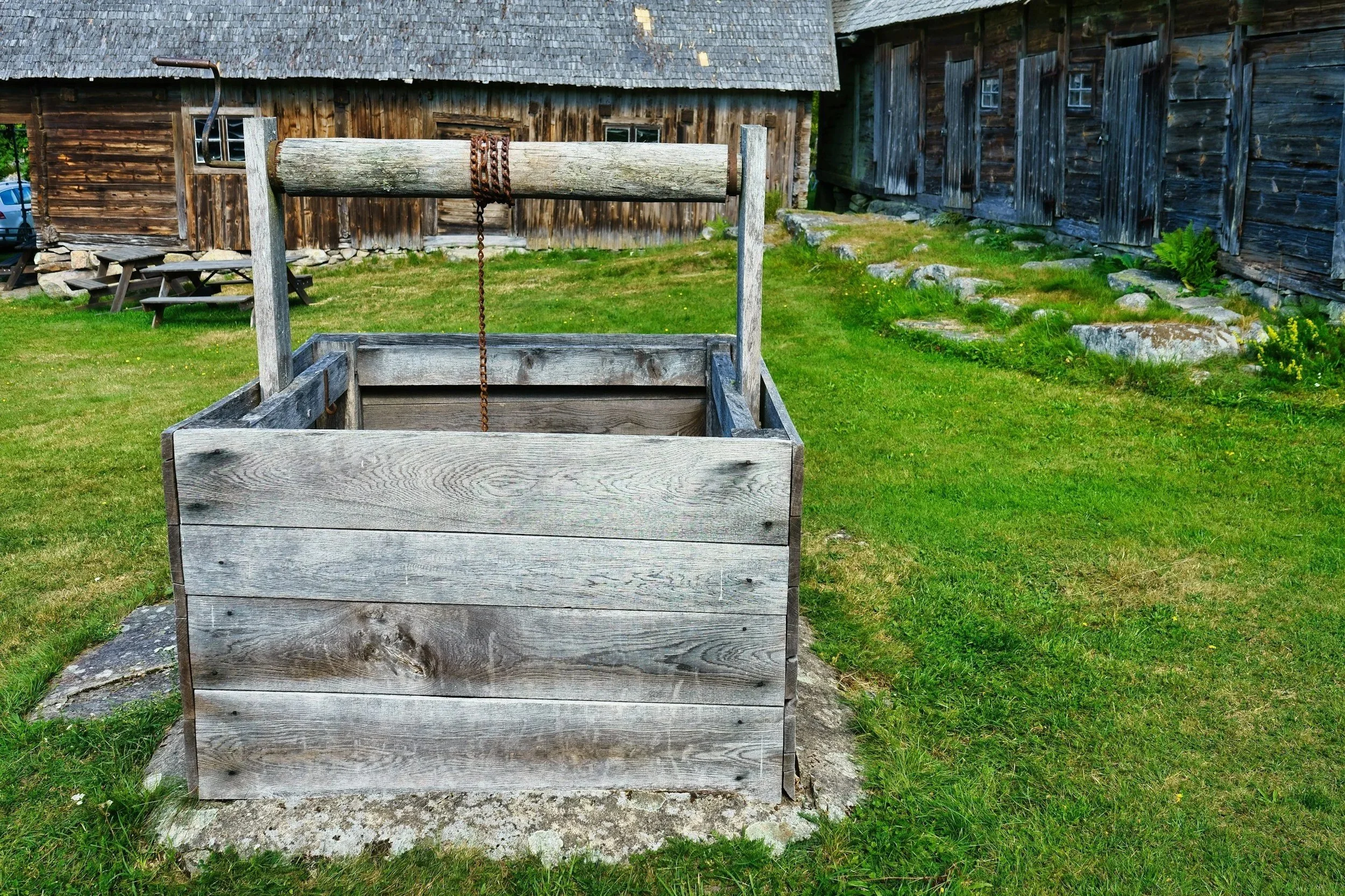
There is a really deep well inside me. And in it dwells God. Sometimes I am there, too.... Dear God, these are anxious times.... We must help You to help ourselves. And that is all we can manage these days and also all that really matters: that we safeguard that little piece of You, God, in ourselves. —Etty Hillesum, An Interrupted Life
We cannot not live in the presence of God. This is not soft or sentimental spirituality; it ironically demands confidence that must be chosen many times and surrender. More than telling us exactly what to see in the Scriptures, Jesus taught us how to see, what to emphasize, and also what could be de-emphasized or ignored. Jesus practiced consistently using questions to keep spiritual meanings open, often reflecting on a text or returning people’s questions with more questions. It lets the passage first challenge you before it challenges anyone else. To use the text in a spiritual way—as Jesus did—is to allow it to convert you, to change you, to grow you up as you respond: What does this ask of me? How might this apply to my life, to my family, to my church, to my neighborhood, to my country, and even the world? –Richard Rohr
Rohr’s 5 steps for a contemplative reading of Scripture, or sacred text:
Offer a prayer for guidance from the Holy Spirit before interpreting a text. This begins to decenter our egoic need to make the text say what we want or need it to say.
Once we have attained some honest degree of intellectual and emotional freedom, try to move to a position of detachmentfrom our own will and its goals, needs, and desires.
Then listen for a deeper voice that isn’t our own. We will know that it isn’t the ego because it will never shame or frighten us, but rather strengthen us.
If the interpretation leads our true self to experience any or several of the fruits of the Spirit, as they are listed in Galatians 5:22–23—love, joy, peace, patience, kindness, goodness, trustfulness, gentleness, and self-control—I think we can trust this interpretation is from the Spirit.
If any negative or punitive emotions arise from our interpretation—such as feelings of superiority, self-satisfaction, arrogant dualistic certitude, desire for revenge, need for victory, or any spirit of dismissal or exclusion—this is not the Spirit at work, but ego.

Contemplative practice is one powerful way to reclaim attention. Rest your attention with an anchor, a home base for meditation such as the breath, a sensation, an image, a sound, or a repeated phrase. An anchor is a primary meditation object to help steady your attention and limit mind-wandering, like an anchor for a ship.… This mental action—recognizing that attention has wandered and then consciously redirecting it—strengthens your capacity to pay attention and develops a host of other skillful qualities, including patience, kindness, and concentration. –Oren Sofer
All donations go directly to Pat & Sarah’s work of welcoming presence, spiritual friendship, pastoral care, and stewardship of land; also donations support Pat’s writings. (suggested: $20-$40/mo)
Subscribe to writing posts on home page (bottom).
To donate, go to ‘support’ page here: