
field work: wordiness & the word, part 3; rhythm & hope
“above all, they were not in a hurry.
They made fewer speeches, and lived more meditatively and more at leisure,
with companionship rather than motion for their solace.
They had far fewer facilities than we have
for the frittering away of thought, time and life.”
Sir Winston Churchill, Marlborough
John Ortberg writes “our society teaches us to oscillate between frenzy and collapse. We commute and cocoon. We have lost the rhythm that develops between abiding and fruitfulness. Abiding consists of all those activities of body and mind that put me in the place where I can receive life from God, including such things as prayer, sleep, solitude, eating, hobbies, and long conversations. Of course, none of these activities in and of themselves guarantee that I will be abiding. They become abiding when I learn how to meet God in them.”
There are no short cuts to meeting God in our activity of life. There are no short cuts to any meaningful relationship. We must choose not be frenetic and fearful in our motion, which is the search to find meaning in sheer activity, possessiveness, secure circumstances and compulsive behavior.
By contrast, we can draw near to Him at any given moment by relinquishing our tight grip on control and saying ‘Here I am, Lord’. God is near to us, in us. And we know that our access to Him is bold, confident and immediate (Ephesians 3:12). His preferred sanctuary is inside us. We must recover a rhythm of listening to this Word, such as contemplative prayer, silence, resting in God’s relentless activity—not ours— resulting in a deep sense of hope rather than a deadening malaise of meaningless activity, fear of disappointing people, complusions and consumption.
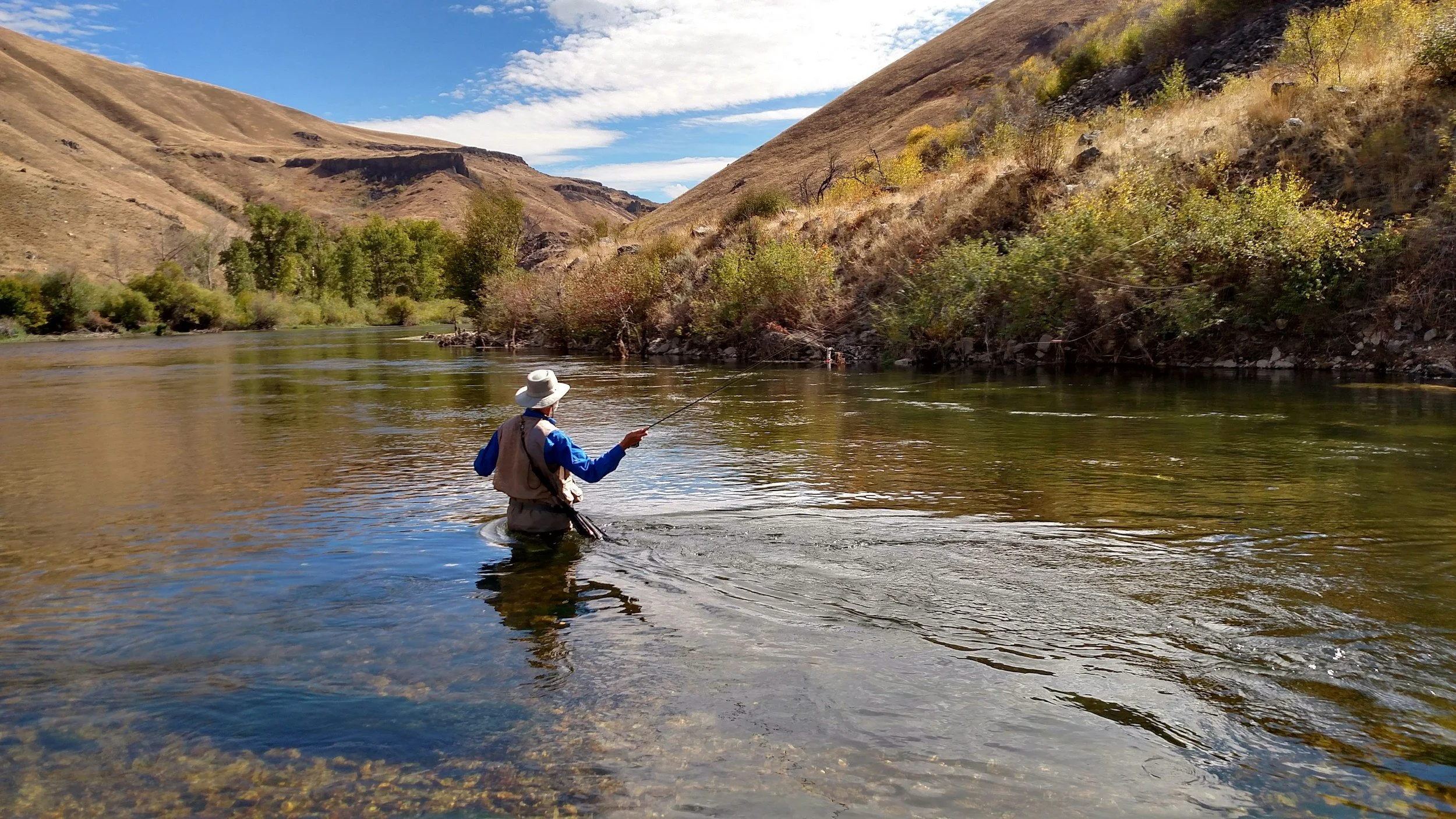
In Norman McLean’s story, A River Runs Through It, he uses the fly fishing and river metaphors to share deeper truths about how we learn to truly love and have a deeper context for understanding tragedy that can befall us. He suggests we must discern deeper foundational words and voices that are heard in stillness amidst the constant cacophony that surrounds us on all sides.
“the voices of the subterranean river in the shadows were different from the voices of the sunlit river ahead. In the shadows against the cliff the river was deep and engaged in profundities, circling back on itself now and then to say things over to be sure it had understood itself. But the river ahead came out into the sunny world like a chatterbox, doing its best to be friendly...”
“What have you been reading?” I [Norman] asked. “A book,” he [the father] said. It was on the ground on the other side of him. So I would not have to bother to look over his knees to see it, he said, “A good book.”
The he told me, “In the part I was reading it says the Word was in the beginning, and that’s right. I used to think water was first, but if you listen carefully you will hear that the words are underneath the water.”
“That’s because you are a preacher first and then a fisherman,” I told him. “If you ask Paul [Norman’s brother], he will tell you that the words are formed out of water.” “No,” my father said, “you are not listening carefully. The water runs over the words. Paul will tell you the same thing...”
“Then in the Arctic half-light of the canyon, all existence fades to a being with my soul and memories and the sounds of the Big Blackfoot River and a four-count rhythm and the hope that a fish will rise.

We have few rhythms that cause us to listen. What’s one of yours? When we do, we will grow the muscles to distinguish the difference between the water that flows over our lives and the ubiquitous deeper Words. And consequently hope will rise.
We need to be still enough to be reminded of the only transcendent reality worth living by: God’s ever renewing loyal love and compassions, new every morning. Listen to the author of Lamentations, lamenting a truly horrific circumstance, unlike most of ours. Yet in his patient waiting amidst sorrow, he comes to this reminder of unfailing love. Thus he has hope.
“I remember my affliction and my wandering... and my soul is downcast within me. Yet this I call to mind and therefore I have hope: because of the loyal love of the Lord, we are not consumed, for his compassions never fail. They are new every morning; great is Your faithfulness. The Lord is my portion, says my soul, therefore I have hope in Him. The Lord is good to those who wait for Him, to the person who seeks Him. It is good that he waits silently for the salvation of the Lord.... let him sit alone and be silent.” Lamentations 3:19-28
originally written as a ‘Godsighting’ by Pat Harrison, 7/21/08.
___________________________
All donations go directly to Pat & Sarah’s work of welcoming presence, spiritual friendship, pastoral care, and stewardship of land; also donations support Pat’s writings. (suggested: $20-$40/mo)
Subscribe to writing posts on home page (bottom).
To donate, go to ‘support’ page here: