
In art, a sketch or ‘study’ is a drawing done to assist in making a more finished picture. In our spiritual lives — our soulful art of being here — we grow through everyday practices, a sketch or ‘studies’ that the indwelling Spirit makes known to us in everyday life, which can transform us more fully toward God’s love and likeness. Here is a sketch on the art of awareness for being still.
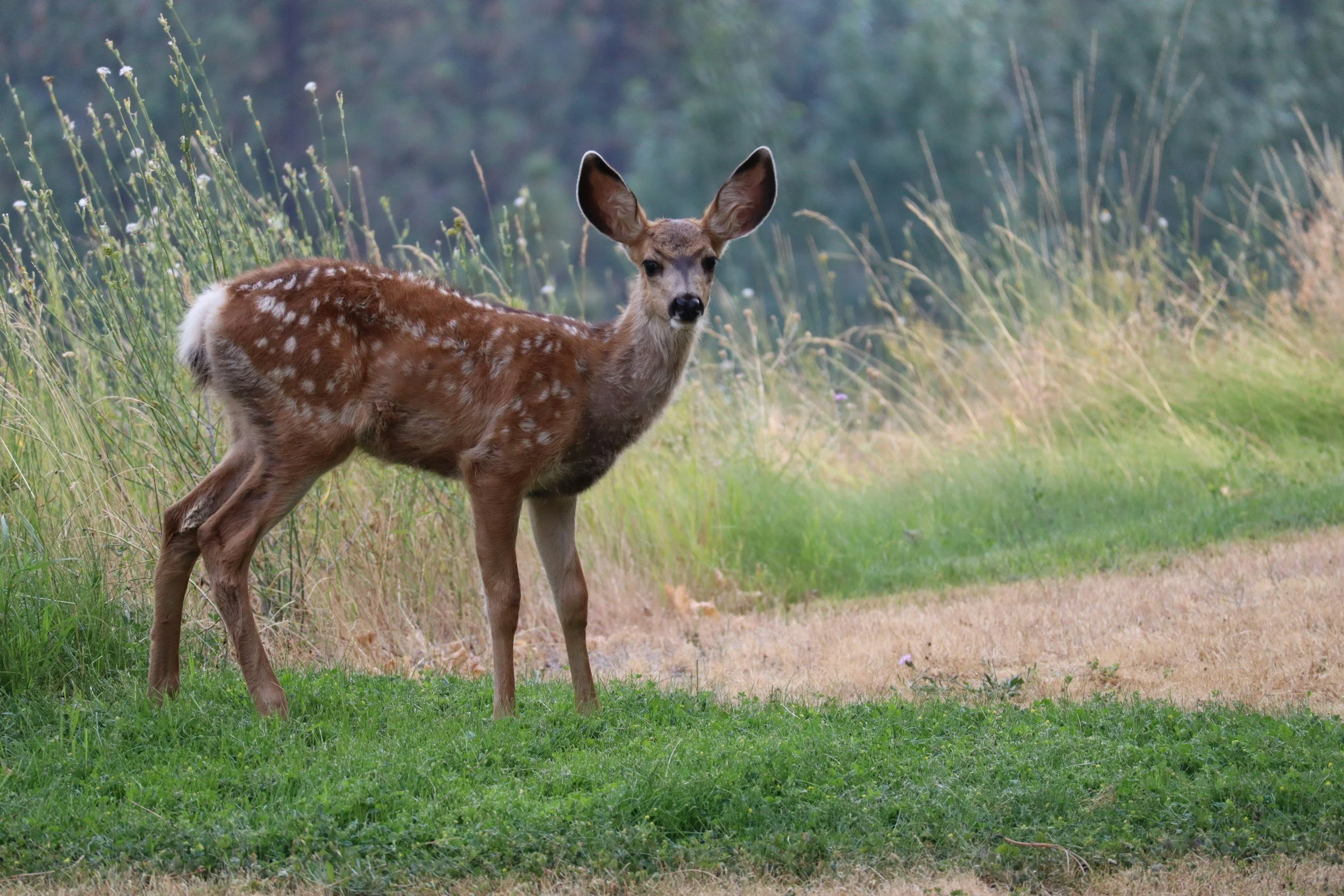
There are a dozen deer wandering stealthily around our property this morning. They breed stillness in us. And awe, as we watch their native way of being. Yet, the littlest sound will skitter them away. It seems when we choose to enter small deliberate times of stillness and contemplation , we easily get distracted and spooked — often lose heart and hope in this practice.
Thomas Merton said: The inner self is precisely the self which cannot be tricked or manipulated by anyone, even the devil. He (the true self) is like a very shy wild animal that never appears at all whenever an alien presence is at hand, and comes out only when all is peaceful, in silence, when he is untroubled and alone. He cannot be lured by anyone or anything, because he responds to no lure except that of the divine freedom.
Be still and know that I am God; Psalm 46:10; the word for ‘be still’ (Hebrew Raphah רפה) means literally to drop, let go (of tight grip or tension), relax, sink down, cease striving (activities & thoughts) empty yourself. This is the contemplative mind at work, not the ego mind. Stillness can awaken us from our illusion of separateness, and our default systems: empire, performance, mask-wearing, emails, production. But when we contemplate we hear love and the small movements of God’s grace in the world.
This kind of prayer is “opening to God’s gracious presence with all that we are, with what Scripture summarizes as our whole heart, soul, and mind (Matthew 22:37). Therefore prayer is more a way of being than an isolated act of doing. Prayer is aimed at our deepest problem: our tendency to forget our liberating connectedness with God. Quiet, contemplative prayer happens when we are still and open ourselves to Christ’s Spirit working secretly in us…. these are times when we trustingly sink into God’s formless hands for cleansing, illumination, and communion. We are in a state of quiet appreciation, simply hollowed out for God.” --Tilden Edwards
Old men ought to be explorers
Here and there does not matter
We must be still and still moving
Into another intensity
For another union, a deeper communion — TS Eliot, from East Coker
It would seem (to me) that TS Eliot is saying that carving out stillness paradoxically leads to wise movements, exploring new country and intensities of ‘deeper communion’. It is far from sedentary, but rather clarifying.
Archbishop Rowan Williams gives us says stillness (contemplation ) isn’t optional for healing our world, and lack of it is insanity. How else can we stop our propensity of objectifying people rather than treating them as subjects of compassion and love? :
Contemplation is very far from being just one kind of thing that Christians do: it is the key to prayer, liturgy, art and ethics, the key to the essence of a renewed humanity that is capable of seeing the world and other subjects in the world with freedom—freedom from self-oriented, acquisitive habits and the distorted understanding that comes from them. To put it boldly, contemplation is the only ultimate answer to the unreal and insane world that our financial systems and our advertising culture and our chaotic and unexamined emotions encourage us to inhabit. To learn contemplative practice is to learn what we need so as to live truthfully and honestly and lovingly. It is a deeply revolutionary matter.
Martin Laird says stillness is an “absence” that is: a moving away from identifying with turbulent ever-changing thoughts and obsessions and emotions.
Recently I found this poem I wrote two weeks before my wife Anne passed away without warning in April of 2001. Little did we know. I didn’t want stillness this way. I’m still trying to contemplate the writing of this with what my brother David used to call the “juxtaposition of the incongruous.”
The Want of Stillness
Much soul-life, made
For stillness
Is yet ruined unrecognizably
By frenetic pace and fear
Of aloneness with self.
To be still,
to relax, to let go
All require loss
of control,
anathema to self.
To reach still,
Like a distant universe seems unreachable
So it remains a dream,
A place imagined, spoken of,
Yet actions to reach it are
Squandered by the urgent.
_______________________________________________________
All donations go directly to Pat & Sarah’s work of welcoming presence, spiritual friendship, pastoral care, and stewardship of land;
Individual donations are their sole source of income for 25 years.
They support Pat’s writing as well. (suggested: $20-$40/mo)
Subscribe to receive weekly writing posts at the bottom of any website page
To donate, go to ‘support’ page here: